Greetings Script Font Review
In the landscape of digital typography, selecting the right typeface is often the most critical decision in a design project. It sets the tone, establishes hierarchy, and communicates brand personality before a single word is read. Among the myriad of options available to designers, Greetings has emerged as a distinct choice for those seeking a blend of modern simplicity and elegance. This script font is frequently cited for its fluid lines and effortless strokes, offering a timeless yet contemporary sense of grace.
This article provides an objective evaluation of Greetings, exploring its aesthetic qualities, practical applications, and suitability for various design contexts. Whether you are evaluating it for sophisticated branding, logo creation, or editorial layouts, understanding its strengths and limitations will help you determine if it aligns with your specific project goals.
Understanding the Aesthetic: Modern Simplicity Meets Elegance
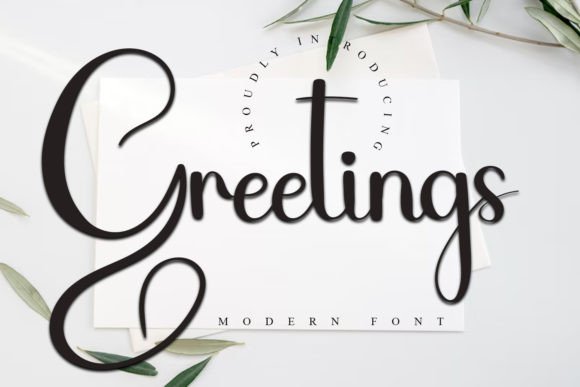
Greetings is not merely a decorative typeface; it is a carefully constructed script that balances readability with artistic flair. The font’s defining characteristic is its ability to capture a "timeless yet contemporary" feel. Unlike traditional calligraphic fonts that may rely on heavy flourishes or complex ligatures, Greetings strips away the unnecessary, focusing on clean, uninterrupted flows.
The visual weight of the strokes is generally light to medium, which contributes to its airy and sophisticated appearance. This minimalism allows the letterforms to breathe, making them suitable for both large-scale displays and smaller text elements where clarity is paramount. The "effortless" nature of the strokes suggests a hand-drawn quality, yet the consistency indicates a high level of digital precision. This duality—looking organic while being technically robust—is what makes Greetings particularly appealing for modern design systems.
Key Applications and Use Cases
Given its elegant profile, Greetings is best utilized in contexts where sophistication and personal touch are desired. It is less suited for dense body copy or technical documentation and more appropriate for focal points in a design. Below are the primary scenarios where this font excels:
- Sophisticated Branding: For luxury brands, boutique businesses, or lifestyle companies, Greetings can serve as a primary logotype or a complementary accent font. Its elegance reinforces perceptions of quality and exclusivity.
- Logo Design: The fluid lines allow for unique kerning and custom adjustments, making it ideal for creating bespoke logos that require a human-centric feel without appearing amateurish.
- Editorial Designs: In magazines, lookbooks, or high-end brochures, Greetings works well for pull quotes, chapter headers, or cover titles. It adds a layer of refinement that contrasts effectively with sans-serif body text.
- Personal Touches: Invitations, wedding stationery, and greeting cards benefit from the font’s natural, handwritten vibe. It mimics the authenticity of real handwriting while maintaining legibility across different media.
Benefits of Choosing Greetings
When evaluating Greetings against other script fonts, several distinct advantages stand out. These benefits contribute to its popularity among designers who prioritize versatility and aesthetic appeal.
- Versatility Across Mediums: Due to its clean lines, Greetings scales well. It remains legible on small mobile screens when used as a header and retains its sharpness in print formats. This scalability reduces the need for multiple font variations.
- Emotional Resonance: Script fonts inherently carry emotional weight. Greetings specifically conveys warmth, approachability, and creativity. It softens the rigid structure of digital interfaces, making designs feel more inviting and personal.
- Modern Compatibility: Many traditional scripts can feel dated or overly ornate. Greetings avoids this pitfall by adhering to modern minimalist principles. It pairs effortlessly with geometric sans-serifs and clean serif fonts, allowing for dynamic typographic contrast.
- Effortless Integration: The font’s simplicity means it does not compete with imagery. In web design, where visual clutter is a common issue, Greetings can highlight key messages without overwhelming the user interface.
Tradeoffs and Considerations
No typeface is universally perfect, and Greetings comes with specific constraints that designers must consider. Understanding these tradeoffs is essential for making an informed decision.
Readability Limitations: As with most script fonts, Greetings is not designed for long-form reading. Using it for paragraphs or extensive UI text can hinder accessibility and user experience. It should be reserved for short phrases, titles, or emphasis.
Kerning Sensitivity: While the individual letters are well-formed, the spacing between characters (kerning) requires careful attention. Poor kerning can make the fluid lines appear disjointed or messy. Designers must be willing to invest time in manual adjustments to ensure the "effortless" look is achieved.
Niche Appeal: The elegance of Greetings may not suit all industries. For tech startups, industrial manufacturers, or budget-focused brands, the font might come across as too formal or delicate. In such cases, a more robust or neutral typeface would be a stronger fit.
Comparing Greetings to Alternatives
When deciding whether Greetings is the right tool, it is helpful to compare it with similar fonts in the market. Alternatives often fall into two categories: highly decorative scripts and functional handwriting fonts.
If your goal is maximum legibility for body text, alternatives like Lato or Open Sans are superior choices. However, if you need a script that feels authentic but structured, Greetings offers a middle ground. Compared to overly ornate scripts like Pinyon Script, Greetings is more modern and easier to integrate into minimalist designs. Conversely, compared to rougher handwriting fonts like Brittany Signature, Greetings appears more polished and professional, making it safer for corporate or high-end commercial use.
Practical Decision-Making Insights
To determine if Greetings aligns with your needs, consider the following questions during the selection process:
- What is the primary emotion you want to convey? If the answer is elegance, warmth, or sophistication, Greetings is a strong candidate. If you need urgency, authority, or playfulness, look elsewhere.
- Where will the font be displayed? Ensure you have tested the font at the actual sizes it will be used. Check how it renders on dark backgrounds versus light backgrounds, as script fonts can sometimes lose definition in low-contrast scenarios.
- Does it complement your existing typography? Test Greetings alongside your current body font. Does it create a harmonious hierarchy? A successful pairing should offer contrast without clashing.
- Is licensing appropriate for your project? Always verify the license terms. Some script fonts have restrictive usage rights regarding commercial projects or merchandise. Ensure Greetings’ licensing model supports your intended distribution channels.
Conclusion
Greetings stands out as a refined option for designers seeking to inject elegance and modernity into their work. Its fluid lines and effortless strokes make it an ideal choice for adding a personal touch to branding, logos, and editorial designs. While it is not a universal solution for all typographic needs, its specific strengths in conveying grace and style make it invaluable for projects requiring a sophisticated aesthetic.
By carefully considering its applications, tradeoffs, and compatibility with other design elements, you can leverage Greetings to enhance the visual impact of your projects. It is a testament to the power of modern simplicity, proving that elegance does not require complexity. For those prioritizing a timeless yet contemporary look, Greetings offers a compelling and effective solution.