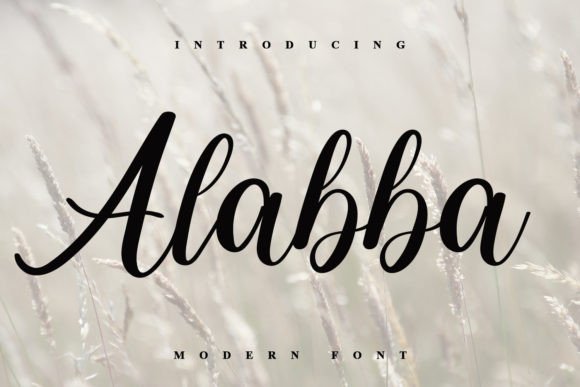
Alabba: A Fresh Handwritten Font for Modern Design Projects
In a digital landscape saturated with rigid geometric sans-serifs and sterile corporate typefaces, there is a growing desire for authenticity. Audiences are increasingly drawn to content that feels human, personal, and crafted with care. This shift has elevated the importance of typography in design, moving it beyond mere readability into the realm of emotional connection. For designers, entrepreneurs, and creators seeking to inject warmth and personality into their work, Alabba emerges as a compelling choice. It is not just another font; it is a fresh and beautiful handwritten style that bridges the gap between professional polish and artisanal charm.
Whether you are designing wedding invitations, crafting social media banners, or building a brand identity for a small business, the right typeface can significantly influence how your message is received. Alabba offers a distinct visual voice that stands out without shouting. Its fluid strokes and natural irregularities mimic the nuance of real handwriting, providing a sense of intimacy that machine-made fonts often lack. Understanding how to leverage this specific aesthetic can help you solve common design challenges, such as creating visual hierarchy, enhancing readability in short bursts, and establishing a memorable brand presence.
The Power of Handwritten Typography in Brand Communication
Why does a handwritten font like Alabba matter in modern design? The answer lies in psychology. Humans are wired to respond positively to organic shapes and imperfections. When we see text that resembles handwriting, our brains associate it with effort, personal attention, and trust. This is particularly valuable for freelancers, bloggers, and small business owners who compete on the basis of relationship-building rather than scale.
Consider the difference between a standard blocky header and one set in a flowing script. The latter invites the viewer in, suggesting that there is a person behind the product or service. Alabba capitalizes on this dynamic. Its "fresh" quality ensures it does not feel dated or overly ornate, which is a common pitfall with many script fonts. Instead, it maintains a clean, contemporary edge that fits seamlessly into current design trends. For marketers, this means you can communicate professionalism while still appearing approachable and relatable.
This balance is crucial for effective communication. If your design feels too casual, you risk losing credibility; if it feels too formal, you risk losing engagement. Alabba sits comfortably in the middle, offering a versatile tool for strengthening your narrative. It helps simplify decisions about tone and voice by visually encoding them into the design itself. When you choose Alabba for a headline, you are instantly signaling creativity and attention to detail.
Practical Applications Across Creative Industries
The versatility of Alabba makes it suitable for a wide array of projects. However, its true value is realized when applied thoughtfully to specific use cases where its characteristics shine. Below are several practical scenarios where incorporating Alabba can improve results and enhance presentation.
Wedding Invitations and Event Cards
One of the most traditional and impactful uses for a beautiful handwritten font is in stationery. Wedding invitations, save-the-dates, and thank-you cards require a touch of elegance and personalization. Alabba’s fluid lines evoke the feeling of a calligrapher’s pen, adding a layer of sophistication that pre-printed templates often fail to achieve. By using Alabba for key details—such as the couple’s names or the event date—you create a focal point that draws the eye and sets the tone for the entire occasion. It transforms a simple piece of paper into a keepsake, increasing the perceived value of your event planning efforts.
Banners and Social Media Graphics
In the fast-paced world of digital marketing, capturing attention within seconds is essential. Banners and social media posts need to be visually striking yet legible. Alabba works exceptionally well here because its distinctive shape breaks through the clutter of uniform sans-serif ads. Use it for short, punchy headlines or quotes. Because it is a display font, it should be paired with a simpler, highly readable body font to ensure clarity. This contrast creates a balanced composition that looks curated and intentional, helping to increase click-through rates by making your content stand out in crowded feeds.
Logos and Brand Identity
For creative professionals, hobbyists, and boutique businesses, a logo needs to tell a story. A handwritten font can suggest craftsmanship, artistry, and uniqueness. Alabba is ideal for logos in industries such as baking, photography, counseling, or handmade goods. It communicates that the business is built on human skill and passion. When designing a logo with Alabba, consider how it interacts with other elements. Its organic curves can soften angular imagery, creating a harmonious visual identity. This strengthens brand recognition by associating your name with qualities of warmth and reliability.
Covers, Flyers, and Crafts
Self-publishers and educators often need to produce materials quickly that still look polished. Whether you are designing an eBook cover, a workshop flyer, or labels for craft products, Alabba adds a layer of refinement. It elevates simple layouts, making them appear more expensive and professionally designed. For crafters, it can be used on tags and packaging to add a personal touch that customers appreciate. This attention to detail supports goals of customer satisfaction and repeat business, as people are more likely to engage with materials that feel carefully made.
Strategic Implementation and Best Practices
To get the most out of Alabba, it is important to understand its limitations and how to pair it effectively. While it is a beautiful font, it is not a universal solution. Like all display scripts, it can become difficult to read if overused or scaled incorrectly.
- Pairing with Complementary Fonts: Always pair Alabba with a neutral, simple typeface for body text. A clean sans-serif or a classic serif will provide the necessary contrast, ensuring that long-form content remains easy to read. This improves efficiency in design by creating a clear visual hierarchy.
- Whitespace is Key: Handwritten fonts often have varying stroke widths and internal spacing. Allow ample whitespace around Alabba text to prevent it from looking cluttered. This enhances presentation and gives the design room to breathe.
- Context Matters: Avoid using Alabba for technical documents, legal contracts, or data-heavy presentations. In these contexts, clarity and neutrality are paramount. Reserve it for creative and emotional appeals where personality is desired.
Evaluating Fit for Your Specific Needs
Not every project requires a handwritten font. Before committing to Alabba, consider the core message you wish to convey. If your goal is to communicate speed, precision, or technological innovation, a geometric sans-serif might be more appropriate. However, if your objective is to build community, express creativity, or offer a personalized experience, Alabba is a strong candidate.
It is also worth comparing Alabba with other similar fonts in the market. Look for a font that matches the weight and flow of your existing design elements. Test it at different sizes to ensure it retains its character. Does it look crisp on screen? Does it print cleanly? These practical considerations ensure that your investment in the font yields tangible benefits in terms of time saved and quality improved.
Conclusion
Typography is a silent ambassador for your brand. By choosing Alabba, you are opting for a typeface that prioritizes human connection and aesthetic freshness. It empowers designers and business owners to create materials that are not only functional but also emotionally resonant. From wedding invitations that celebrate love to banners that capture attention, Alabba provides the tools to elevate your creative output. Embrace its unique character, apply it with strategic intent, and watch as your designs gain the depth and appeal they deserve.